
The following briefing note is a set of 3 documents; Part A identifies some of main risks associated with the major types of construction work that Oxfam undertakes. Part B is a recommended risk assessment template for completion prior to major works commencing. Part C is a checklist of actions and guidance for staff, partners and contractors that can also be included in MOU’s and larger construction contracts
The guidance provided should not be viewed as complete and comprehensive list of all risks that may be encountered, but rather as good practice and a practical guide for staff, contractors, partners and volunteers.
Background
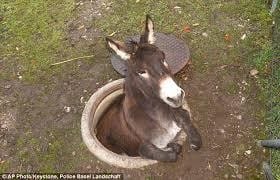
Projects involving construction raise significant risks of injury and death. The most common are road traffic accidents which also include tankers crushing or running over people in camps. Others include falling into unfenced wells or latrine excavations, as well as incidences of children falling into waste pits or wells and waste stabilization ponds, construction workers (either staff, contractors or beneficiaries) suffering asphyxiation from generator fumes or natural gases in wells. Another common occurrence is materials falling from height, or poorly constructed concrete structures collapsing and injuring people. Chlorine explosions have also occurred from improper storage of dangerous chemicals.
A lot of the time this is due to lack of:
- Lack of barriers around sites
- Lack of or no risk assessments, or outlining obligations
- to contractors both verbally and in their contracts
- Lack of supervision (by OGB & contractors)
- Lack of Personal Protective Equipment (PPE)*
*PPE can range from wearing a hard hat, boots and gloves on regular construction of wells, boreholes, latrines etc to a fully protected suit, hood, mask, apron, gloves etc to protect from contagious diseases such as ebola. PPE is context specific therefore needs to be assessed against the risks associated with the job.
Risks
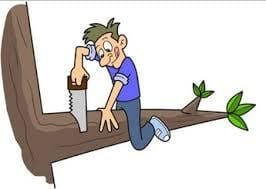
The hazard, likelihood and severity of each activity determine the level of risk.
What we aim to achieve is to mitigate the risk by reducing the hazard itself or factors that contribute to it, such as:
- Careless workers and work methods (through e.g. lack of experience, supervision, inebriation, heat exhaustion).
- Interference by onlookers or animals.
- Faulty equipment; excavators, electric tools, ladders, etc
- Lack of fencing/scaffolding & falling materials, tools, on site or in transit
- Risk of collapsing soil in trenches, pits, large excavations.
- Poisonous gases from explosives, petrol/diesel engines, soil methane.
- Problems of incoming water weakening and undermining structures.
- Dangerous driving & vehicle movement around site
Additional Risks
- Working where there are buried munitions, such as mines. Seek specialist advice and services.
- What you do on site, can have impacts elsewhere, so be mindful not to pollute groundwater with fuels, chemicals or lubricating oils.
Know whose responsibility is it to make these more avoidable?

This part is about knowing your responsibilities on site and those of others.
Beneficiaries:
Where beneficiaries are jointly participating in construction with Oxfam, the organisation has an obligation to ensure that basic health and safety equipment is provided where necessary, and project/task dependent. Beneficiaries can be requested to inform Oxfam staff if
security fencing, equipment or any other factors compromise their safety and that of their community, especially children.
What should you do?
- Inform beneficiaries of the risks and necessary safety measures of activities which they partake in, and within their surrounding environment.
- Provide basic H&S equipment if required
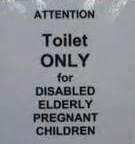
- We recommend you regularly remind beneficiaries of the risks. Place signs in key locations (written and pictoral) but be careful with the wording…and translating.
Volunteers:
Volunteers can be community members digging latrines pits, to external members of the public and non contacted staff supporting a range of activities. Although not contracted by Oxfam, they do represent the organisation. Beneficiaries, other organisations cant always distinguish between who are volunteers, and who are staff.
What should you do?
- Oxfam has an obligation to inform volunteers of risks to themselves and other & ensure that basic health and safety equipment is provided, where necessary and project/task dependent.
- Ask them to look out for risks and inform the community and Oxfam as soon as possible.
Partners:
Though it should be recognised that Oxfam will not have full responsibility for partner’s health and safety practices, it is appropriate for Oxfam to influence partners as much as possible into developing good practice measures. Remember, the work they undertake is also representative of Oxfam.
What should you do?
- Any MoU where construction work is to be undertaken, the same terms and conditions that are used for contractors should be inserted into partners MoU to ensure that their obligation to health and safety of beneficiaries is upheld.
- Check on site conditions before and during construction
NOTE: A checklist of health & safety conditions and criteria will shortly be included in each tender contract. Make sure you know what’s in it so as to provide appropriate advice and conduct inspections.
Contractors:
The work they undertake is also representative of Oxfam so be aware of what they do, and how they do it. Therefore where any construction work is to be undertaken, the contractor should complete the following: Health & Safety and Environmental Risk assessment with
mitigation measures stipulated.
- Comply with camp management or site rules
- Assure responsibility for safe site entry/exit as well as the primary work eg drilling a borehole
- Make safe any equipment, excavations, partial construction at the end of each day.
- The contractor will be responsible for his own staff, their actions and measures taken. The contractor will be liable for any incidents that take place.
What should you do?
Oxfam (PHE, logistics & PM/CD) should require that the appropriate information, contractual documents, briefings and checks to be undertaken to enable the contractor fulfils his obligations.
Check on site conditions before and during construction
NOTE: A full list of legal terms and conditions is being developed by the legal and logistics team to be included in each contract.
- Oxfam as sub-contractors to UN or other agencies:
We have responsibilities for good practice, as we would under normal conditions. - As well as our own policies, standards and ways of working, we may also have to consider policies and contractual obligations of the contracting agency where we as Oxfam are sub-contractors so check with your funding coordinators for any small print.
What should you do?
- Check all risk mitigation measures (assessments, correct PPE ), and site supervision along with the attached guidance and checklist.
- With logistics, check what our requirements are in contracts between Oxfam and UN agencies.
Managing Risk:
Managing Risk:
There are greater risks associated with working under emergency conditions. In some developing countries with limited national laws and/or health and safety practices, coupled with lower general awareness. This reminds us that we need to be more vigilant to potential risks.
Find out more on how to manage specific risks on the COSHH (Control of Substances Hazardous to Health) website http://www.hse.gov.uk/toolbox/index.htm However, in an emergency, where a disaster poses a greater threat to the general population, a balanced view on the relative risks has to be taken. The rigid adherence to health and safety practices in the work place that restricts the speed of response to save lives may be inappropriate.
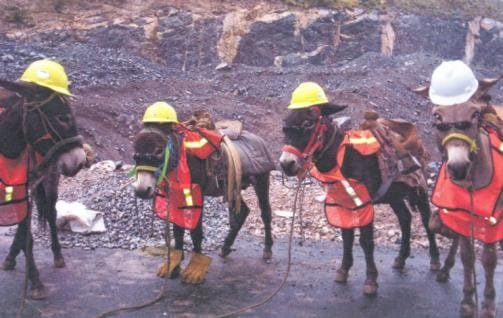
General guidance for all works
| At all times | |
| Make the site secure,(e.g. metal or mesh fencing. Where that’s not available thorny brush around the perimeter). People may be authorised to access the whole site or be restricted to certainareas; Provide signs that can be understood by children (drawings and simpleterms) Ropes should not be left dangling (attached to buckets, or other tools) to allow children to reach and pullon. | Barrier off and securely cover over excavations and pits. Isolate and immobilise vehicles and plant, if possible lock them in acompound. Store building materials (such as pipes, manhole rings, and cement bags) so that they cannot topple or roll over. Remove access ladders from excavations and scaffolds. Lock away hazardoussubstances. |
It is recommended that a formal risk assessment be carried out at the start of any new project. This should identify and mitigate, as far as possible, the risks identified. This could be low electricity poles and wires that lorries or jibs may find it difficult to drive under, weak bridges not suitable for heavy loads, tight bends or spaces where trucks cant turnaround, restricted width of roads or between buildings etc. Mitigating risk is the key, so take a walk or drive through the chosen route and around the site before starting the work. Site safety reviews should then be carried out at reasonable intervals and risks of individual tasks, such as digging a well or erecting a tank, should discussed with the local work force before activity is started.
Managers and project leaders have a responsibility to create a culture of good practice and safe working environments. They should have a good understanding of any national health and safety legislation and practises that may be applicable, as well as relevant Oxfam guidelines.
Those workers who regularly ignore safety guidelines should be appropriately disciplined.
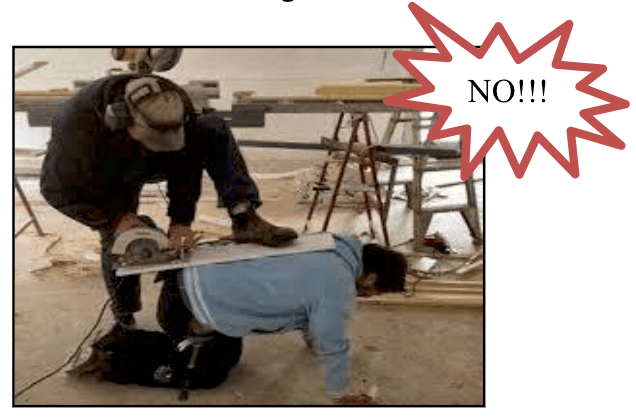
Finding innovative ways of working in the field is sometimes necessary when the equipment may not be available, but don’t put yourself or others in danger.
Site Access
The principal contractor or engineer on site must take reasonable steps to prevent unauthorized people accessing the construction area.
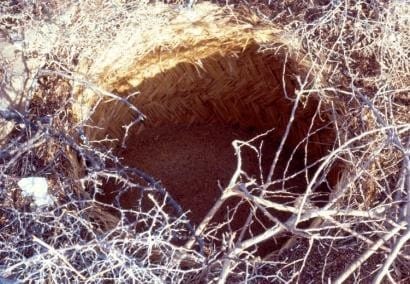
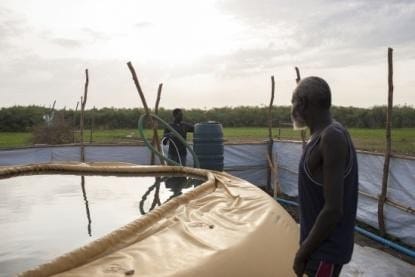
Children are drawn to construction sites as exciting places to play, and animals often roam where they like. You must do everything you can to keep them out of the site and away from danger. Always be vigilant. If you don’t secure the site or your equipment, then be prepared to find things aren’t the same as you left them, or unexpected and unwanted additions.
Do this
Driving around Site
Sadly, there have been incidences of children and adults being struck by moving vehicles in camp settings resulting in either death or serious injury. Naturally this can anger and upset the local residents and families, which sometimes results in strikes and attacks on staff that means the project has to be stopped. The central part of our work is cultivating trust and participation with beneficiaries. Incidences like this can cut these ties and leave permanently damaging results for those affected.
Mitigation first:
It should be basic design criteria to minimize the need for tankers of any description (potable or waste water) to be entering and driving through a crowded refugee camp at any time of day. Where possible, designs should be done to reduce this with potable water being delivered outside of the camp perimeter to a central collection point from where it is delivered to the point of use through a distribution network.
Any tankers should have at least one worker in addition to the driver to guide the driver in on-site maneuvers.
A recommended speed limit of 3 mph/5 kmh in all areas, on or within the camp boundaries.
Falling Objects & Working from height
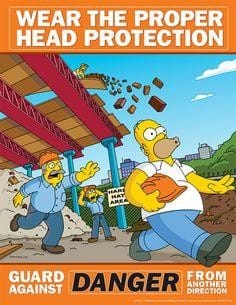
Any materials being lifted by a jib should ensure the areas below are clear of personnel (workers and public).
Those operating such vehicles should have a watchman on the ground (see section below) to ensure the area is clear.
Hard-hats must be worn by all construction personnel when operating at height or working directly below Ropes should not be left dangling (attached to buckets, or other tools) to allow children to reach and pull on.
Openings & Excavations
| Soil Type | Line after digging the pit | Line the pit as digging |
| Cotton soil | Not advisable | X |
| Sandy | Not advisable | X |
| Loose rock & sand mix | X | |
| Stable mixed soil/stone | May only need to support pit mouth only | |
| Moderate clay content | X | |
| Loam | X | |
| Clay | This is not appropriate soil for latrines – if no alternative then line as digging | |
Recommendations:
Latrine pits should be small and circular as this reduces likelihood of collapse during excavation and during latrine use.
Where the soil is sandy or loose, the walls of the pit should be sloped, this will reduce the risks of the pit collapsing while people are in the pit.
The walls of the pit should be supported, where required, with materials such as sand bags, bamboo poles, corrugated sheeting, concrete culverts and so on.
Drainage channels around and away from the excavation to ensure surface water runoff during rainfall should be adequate to prevent water going into pits, as this will cause instability.
When wells are abandoned they should be suitable capped off. Where wells are to be fitted with pumps at a later date they should be temporarily capped.
Ensure robust fencing around the opening
Erect warning/notice signs in local language, and pictures for children to understand
These excavations must never be left unguarded, unmarked and exposed during the night hours.
Sealed/locked covers need to be in place at all times during and after construction to stop curious people and animals entering.
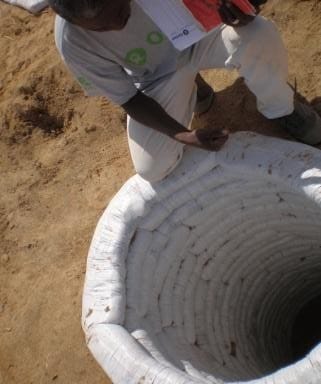
Within the well
[AlsorefertoTBN6;Repairing,cleaning&disinfecting hand dugwells]
All ladders should be firmly secured.
No smoking —— No matches No naked lights.
Nylon ropes should not be used- static electricity causes sparks which can cause explosions if there is methane about. A bucket is a better option for passing tools up or down than throwing them and hoping the person below can catch. Combustion engines should never be used down a well as carbon monoxide present in the fumes is an odourless and a silent killer. Electrical submersible pumps should be usedinstead.
! Snake & Scorpion Alert!

Scorpions like to burrow in sand or soil, so especially like construction sites where the ground has already been raked or near water where both catch their prey. Snakes come out in flood waters and like to hide in cool, dry places like culverts, pipes, wells, concrete rings- basically, all the areas described above. Take extra care when moving materials and going down into pits and excavations. In the event of snake bite remember to:1
- Lie the casualty down with their head and shoulders raised. Keep them calm and reassure them. Advise them not to move their limbs. Get them to A&E as soon as possible.
- If there is no pain, apply a pressure bandage at the site of the bite. Do not remove clothing as this can speed up the absorption of venom.
- Apply another pressure bandage that extends from the site of the bite as far up the limb as possible. If possible, mark the site of the bite. Immobilise the limb.
- Do not use a tourniquet.
- Do not slash the wound.
- Do not try to suck out the venom
Preparedness, precaution & planning in advance
- 1st Aid Kit
- Clean water (for dehydration and cleaning wounds)
- Contact list of emergency staff and hospitals/clinics/doctors in the area
- If there is no phone signal have a back up radio (and batteries), If there is no radio signal, set up a system set up with your base (return date/time) so they can be alerted
Oxfam Tanks & Pipes
Handling of Oxfam water tank sheets (Codes T11, T45S, T70S and T95S) needs particular care because of the sharpness of the edges, which can easily cause cuts and wounds. Gloves should be worn when unloading and handling these sheets, and care taken when moving them around to avoid injuring other workers.
Construction of all Oxfam water tanks requires the use of ladders and / or scaffold platforms for access in and out during construction. Proper materials and methods should be used.
When PE water pipe is supplied in coils (Codes DP, DPE63C, DPE63S and DHP90C), these must be opened with care as there is a tendency for the pipe to spring out when the straps are cut. Straps should be cut progressively, starting with the strap nearest the end of the pipe on the outside of the coil.
Mechanical drilling programmes
A site appraisal should be carried out to identify any particular local hazards, including hazards to vehicular access on poor ground conditions. In urban or peri- urban areas, buried services such as electricity, water, and should be located to avoid damage and risk to personal safety.
Recommendations:
- The drilling work area should be levelled, with drainage installed if required.
- All personnel within this area should wear safety helmets, gloves, stout boots and overalls when working by the rig.
- Eye protection should also be worn during mechanical operations such as cutting, and grinding, and when using chemicals
- Where the drilling operation requires the use of ladders or scaffold towers, these should be properly designed, installed and fixed.
- Jacking points should be set up carefully, using boards/planks as footings to ensure the ground can take the load.
- Engines on compressors, mud pumps, etc. should only be operated by workers familiar with safe working practice.
- Moving engine and drill parts should be protected with guards where possible.
- High-pressure circulating fluid lines should be adequately protected from damage, through use of boards, covers, sleeves etc.
- Where drilling will be undertaken at night adequate lighting should be available and be used.
- Excessive speed is destructive to both machinery and equipment and is a major factor in accidents, so all drilling should proceed methodically and not too rapidly.
- Care should be taken when using wrenches. Hands should never be placed on wrenches when they can get trapped between wrench and rig, and wrenches should not be used on moving drill rods.
- The drill pipe should be handled using gloves, and the working platform should be free of grease, mud or ice.
- Drill rods should not be handled at the male end and care should be taken to file down burrs before joining pipes.
Air Compressors
Compressed air should not be used for odd jobs such as removing liquid from storage drums unless the airline is fitted with the correct end fitments.
Compressed air supply should never be cut off by kinking or bending of hoses.
Compressed air should not be used to blow dust from clothing whilst being worn.
Electrical Safety Standards
| Standard Procedures | Mandatory Procedures |
| ➔ Work on electric cables must not proceed until these have been electrically isolated and checked that these are not live. ➔ Test the wiring system (Megger test, Continuity test, Earth leakage safety etc.) ➔ Test the over load setting of the pump to be within the rated current of the motor. ➔ Check the protection for lack of water (for pumping system). ➔ Accuracy of all meters (volt, ammeter, hr, pressure, flow). ➔ Distribution boards are lockable ➔ Cables and leads should be protected from damage by sheathing or by positioning away from potential damage. | ➔ No switches or fuses, or any electrical fitting should be positioned in a place where there is any danger of water entering or of people with wet hand using it. ➔ All fuses should be protected from rain, if possible in a waterproof box. ➔ No high voltage cables should run across the ground, all must be safely secured in an elevated position, above the reach of children. ➔ Any illegal/unsafe connections should be immediately disconnected. ➔ No WASH facility should be connected to the main power supply without approval from an electrical expert. |
Electrical Safety

Electrical design, fittings and distribution systems are a key safety issue.
In many cases, the general condition of the electrical systems in camps can be very poor, with dozens of improvised wires being attached to lighting and electrical distribution poles by the refugees themselves resulting in a very dangerous situation. Therefore extra care needs to be taken when installing or repairing electrical lines, circuits as they may have been tampered with.
The recommendations and guidance provided should also be observed for any other infrastructure; such as roads, drainage, schools, offices etc.
- Handling of chemicals for water treatment and vectorcontrol
[Forstorage,useanddisposalofmedical,asbestos andhazardouswastesseeOxfam’sTBN18]
Oxfam use various chlorine products, as well as aluminium sulphate (water treatment) and some chemicals for vector control.
In all cases:
[Alwaysreadthelabelandadvisoryprecautionson howtousespecificchemicalproducts.]
- Employees should be properly trained in the use of these substances.
- Care should be taken that substances cannot be absorbed through the skin or swallowed, and appropriate protective clothing and washing facilities should always be made available.
- Storage of different chemicals in the same storage location should be avoided. Store only in well ventilated areas. Open only one type of chemical at a time
- Aluminium sulphate and chlorine products should only be used in well-ventilated areas.
- Workers should avoid breathing in the fumes / powder of chemicals, as they will irritate the nose and lungs. Face masks should be worn where appropriate.
- Safety when using chlorine
All partners/staff understand that chlorine is a potentially dangerous chemical. Find out more about different types of chlorine, dosing, and how to use them safely on the WHO link which provides multiple factsheets for guidance and information
http://www.who.int/water_sanitation_health/hygiene/e mergencies/envsanfactsheets/en/index1.html
The critical messages are as follows:
- Different types of chlorine (SDIC, HTH, NaDCC, etc.) should never be mixed together, they can create an explosion.
- Chlorine, in any form, is an extremely dangerous chemical and needs to be treated with caution.
- Chlorine products (SDIC, HTH and NaDCC) should NOT be exposed to sunlight and heat – This might be an issue if stored in tents
- Wetting (spilled water e.g. just small amount splashed) will result in release of chlorine gas and potential heat reactions
- Might be an issue if raining or otherwise humid around/in the tent of storage, dry storage is required
- Other chemicals stored nearby may result in reactions- keep them separated
- Any fire, even a cigarette, may cause fire and reaction with the chlorine products
- Anyone mixing chlorine solutions should always use eye protection (goggles) and have eyewash in the first aid kit (minimum water) in case of accidents.
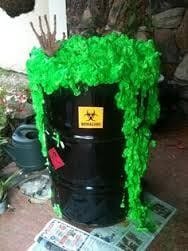
Shelf Life Limitations:
Do not store product where the average daily temperature exceeds 35°C / 95°F. Storage above this temperature may result in rapid decomposition, evolution of chlorine gas and heat sufficient to ignite combustible products. Shelf life (that is, the period of time before the product goes below stated label strength) is determined by storage time and temperatures. You can still use it even after its shelf life expiration, but you will need to use more and test the strength to reach the optimum concentration. Store in cool, dry and well ventilated area. Best practice where you don’t have the above conditions for storage are to use and replace as and when needed to limit storing of chemicals on site.
Incompatible Materials for Storage:
Do not allow product(s) to come in contact with other materials, including e.g. other pool treatment products, acids, organic materials, nitrogen- containing compounds, dry powder fire extinguishers (containing mono-ammonium phosphate), oxidizers, all corrosive liquids, flammable or combustible materials, etc. A chemical reaction with such substances can cause a fire of great intensity.
Chlorine & PPE
All forms of chlorine can be dangerous if not stored and handled correctly as they become caustic once it wet, or mixed with water. The following simple rules must always be followed:
Protective clothing such as gloves, goggles and overalls or apron should be worn.
Any chlorine solution splashed onto skin or hands should be washed off immediately with plenty of water. If it should splash into eyes, they should be rinsed repeatedly with clean water, and medical assistance sought as soon as possible.
Disposal of aluminium sulphate flocs
Suitable arrangements should be made to dispose of aluminium sulphate flocs after water treatment, so that they do not contaminate water supplies or constitute a health hazard. The most straightforward method is to use a suitable drainage channel filled with coarse sand/gravel, where the liquid load can be separated from the solid. The solids can be then be dried and disposed of by burial in plastic bags / sheeting, or buried where there is no proper disposal site.
Vector control chemicals

Oxfam does not normally deal with vector control. In the event that you do, the two main chemicals likely to be used for dipping mosquito nets, Delthamethrin and Lambda- cyhalothrin. Gloves must be used when dealing with these chemicals, as they are known to cause skin irritation. This product can also be
harmful to fish and should not be allowed to pollute aquatic habitats. Where workers are required to undertake spraying activities they should be fully equipped with gloves, goggles, face mask and overalls [Oxfam kit CodeXSO].