
Innovation outcomes in water sanitation and hygiene (wash)
Oxfam is renowned internationally for its expertise in Water, Sanitation and Hygiene Promotion. We provide WASH services directly to communities in emergencies and promote more sustainable approached to WASH in our recovery and longer-term programmes. Oxfam has a long history of developing new innovations and technologies, and since 2004, those have been supported through the Oxfam WASH Innovation Fund. This paper summarises some of Oxfam’s key WASH innovations, many used across the entire WASH sector.
The Oxfam Water Tank
Problem: In the 70’s and early 80’s Oxfam was having to build water tanks out of local materials in emergencies which would be very time consuming. There were very few plastic tanks at that time and would mean transporting large amounts of air on trucks and air-freighting these tanks was out of the question.
Solution: Oxfam’s technical team had the idea to use the water tanks used by British farmers for water storage in emergencies. In the mid 1970s The Oxfam Technical Unit worked with a UK supplier, Butyl Products, to adapt these tanks into units which could be flat packed into small crates and easily erected on site in a few hours. This totally revolutionised water provision in emergencies.

Outcome: Now, some 40 years after they were invented all humanitarian WASH agencies use the ubiquitous Oxfam tank. The tank has been modified by Oxfam several times since the 1st appeared in 1976, the last modification being in 2019 where a new steel roof was designed. There are two UK suppliers and some replica designs being sold around the globe: the UK suppliers sell approximately 800 Oxfam Tanks each year between them for use in humanitarian responses.
Oxfam Water Testing Kit
Problem: By the 1970’s, it was well known that just because water looks clean did not mean it is safe to drink. The issue was getting a sample back to a lab, mostly only found in the capital of a country before the sample was “spoilt”.
Solution: Oxfam worked with Surrey University to produce the Delagua field biological testing kit
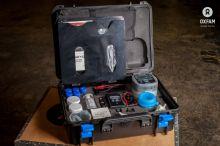
Outcome: This kit, 1st on sale in 1985, was the only bacteriological field-testing kits and so was purchased by all the WASH agencies for development and emergencies, and many Government departments across the world. Now there are a number of very similar versions and other systems for biological water testing but the Delagua kit remains one of the most used testing kits some 35 years later.
Oxfam Safe Water Container – Bucket
Problem: In the mid 90’s Oxfam technical advisors had seen that although Oxfam was producing safe water at the emergency tap stands, people displaced from their homes often did not have clean containers to store the water in making all the time and effort in producing safe water useless. Later studies clearly showed that the majority of water contamination occurs during storage even if the source water is safe to drink.
Solution: In 1996 -97 the Oxfam technical team designed the best possible container for safe water transport and storage in emergencies. The features were a stackable container with a lid that would be snapped on on-site with a hole and cap in it for filling and emptying.
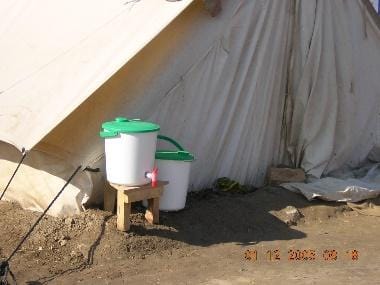
Outcome: All the major agencies now use the Oxfam bucket, it has been copied by 4 manufacturers in different parts of the world and continues to be the only universally accepted safe water container for emergencies. In 2004 a tap was added after research showed that people were more likely to keep the lid on if a tap was attached, and they would not use it as a multi-purpose bucket but as a safe water container. This theme was continued in 2017 when the new Jerry Bucket was launched with a lid which cannot be taken off once put on and a bigger filling hole in the lid to accommodate filling from handpumps. Oxfam has sold around 650,000 of these buckets since production began in 1997.
Oxfam Latrine Slab
Problem: In the late 90’s the only pre-formed latrine slabs available were 40 cm by 60 cm slabs. This was too small to build a cubicle directly around and they also needed supporting across the width of the latrine trench. Extensive building around the plastic slab took valuable time at the start of emergency responses.
Solution: Oxfam developed, firstly with a manufacturer in the UK and then India a self-supporting 1.2m x 0.8m plastic slab complete with a foot operated hole cover. The superstructure could then be built directly around the plastic slab. The size and rigidity of the footpads were assessed by consulting users from many different countries and validated by all the major humanitarian agencies.
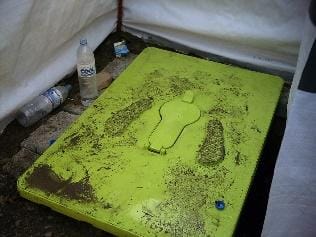
Outcome: This emergency latrine slab design is now the only slab used across all the agencies. It is manufactured by at least 4 major global suppliers and has been copied locally in a number of countries. It has been so successful that agencies have largely stopped making slabs locally in emergencies which is an unfortunate unintended consequence. UNICEF alone bought 35,000 latrine slabs over the last 3 years. Oxfam’s average purchases over the last 20 years are 4500 per year.
Since 2004, Oxfam has carried out 72 distinct WASH projects, and many of the innovations have been implemented by other agencies. The purpose of the WASH Innovation Fund is to:
- Encourage a culture of innovation amongst our Oxfam field staff, who are encouraged and rewarded for seeking out new ways of working
- Play a critical role in helping the WASH sector develop more effective approaches and technologies, thereby improving the impact WASH programmes have on the poor and disaster affected people. The key here is that we are creating models that governments, institutions and the wider WASH sector as whole can follow and implement, not exclusive to Oxfam
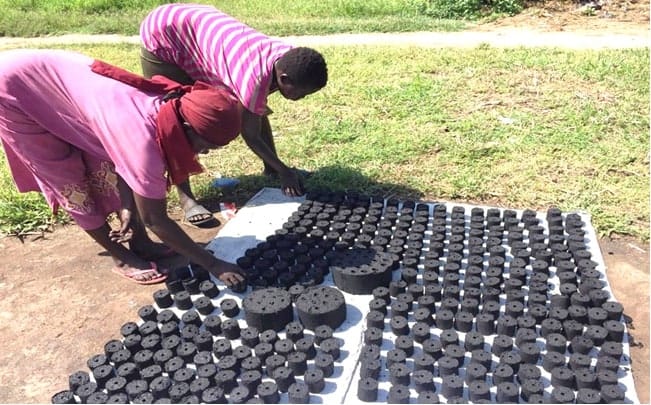
Handwashing
Problem: In developing countries, diarrhoea and respiratory infections remain leading killers of young children and claim approximately 3.5 million young lives each year– both can be reduced through hand washing. Hands are the last line of defence in the chain of transmission of gastrointestinal germs either directly by hand-to-mouth, or indirectly by handling food or water. Hands also play a part in the transmission of respiratory tract, skin and eye infections – hands can be contaminated by respiratory viruses, and infections transferred by rubbing the eyes.
Solution: Since 2009 Oxfam has been conducting a series of projects in different countries to understand how best to increase handwashing practices especially for children. Projects were held in West and East Africa, South and South East Asia in rural, urban, camp and non-camp situations. Some also looked at the use and impacts of alternative to soap such as ash. Trials in a wide range of countries were conducted involving;
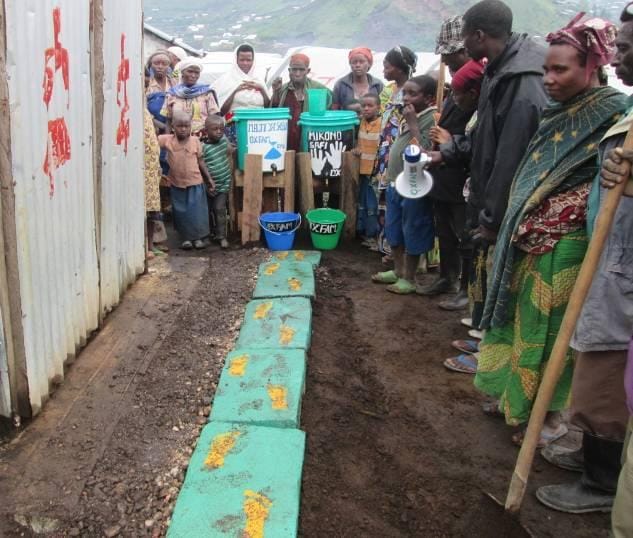
- installation of easy to hand washing stations at the latrines and provision of handwashing containers and soap for each household
- behavioural nudges (colourful footpaths or mirrors above handwashing stations intended to unconsciously direct people towards handwashing stations at the latrines),
- motivational triggering (activities to promote handwashing, for example through theatre performances or workshops with children, and using disgust to shift behaviour).
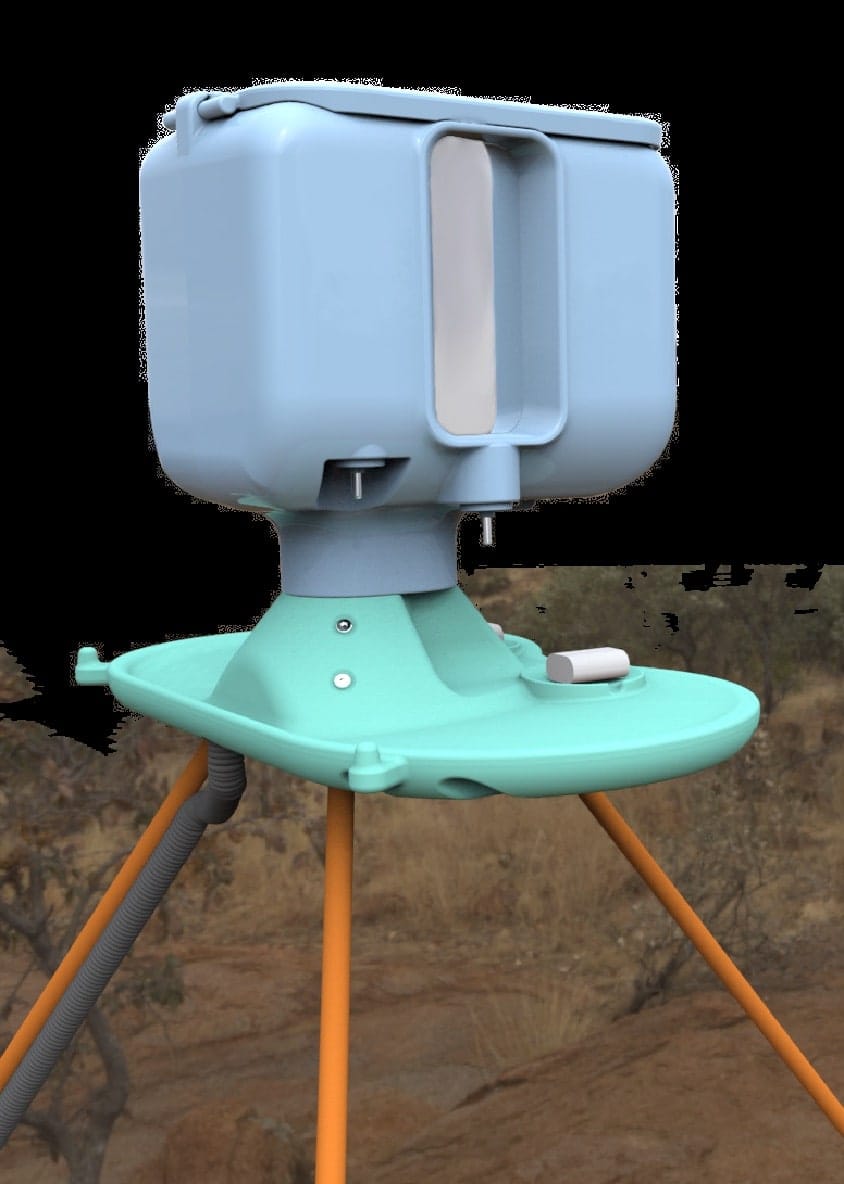
Outcome: The research has shown that an improved handwashing device and the proximity to it significantly increase handwashing both at communal and household level. The colourful footpath nudges, mirrors and provision of soapy water do initially result in increased handwashing. In 2019 Oxfam developed an attractive handwashing station which is now on sale at the Oxfam supply centre and in great demand from other agencies. It is promoted along the ‘Mum’s Magic Hand’ resources including interactive methods such as storyboards to promote hand washing across different contexts.
Involving communities in WASH – Community Perception Tracker
Problem: People’s motivation to change their behaviours and adopt positive practices such as hand washing at critical times is subject to various factors: knowledge is certainly important as is the availability of water and soap. However, a lot of people’s choices are affected by local beliefs, socio-cultural norms and their perception of risk and added value. These nuances are often hard for field teams to collect, understand – and act on to ensure effective programmes.
Solution: The ‘community perception tracker’ (CPT) uses mobile technology to systematically collect, analyse and use qualitative information relating to people’s perceptions, beliefs, ideas and rumours. The trial during the Ebola outbreak in DRC highlighted that CPT gave easier and faster data collection leading to quicker adjustments in programme activity. Evidence could be easily shared to advocate on behalf of communities, and promote important changes in how services are delivered. CPT helped to identify important information gaps and to adapt information content on an ongoing basis – critical to promote trust and support behavioural changes
Outcome: Oxfam used the CPT in the 2018 Ebola outbreak in DRC. Community feedback generated by the CPT was used to successfully advocate for changes in the vaccination protocol including pregnant and lactating women, and the burial protocol, leading to less women being involved in the carrying of coffins during safe and dignified burials so as to avoid divergence with local norms and traditions. It also helped to lobby for a greater involvement of the local population in the delivery of the response services.
Sustainable Sanitation – Urine Diversion Toilets
Problem: Pit latrines in emergencies and long term use require frequent, costly desludging. In areas where it is not possible to dig pits, providing raised faecal sludge “storage containers” is a costly business. In both contexts the desludged material still needs treatment and to be disposed of properly.
Solution: Key advantages of UDDTs over other toilets include: waterless operation, reduced odour and flies, reduced pathogen load and simpler emptying. They can also be built above ground, without having to dig into hard soil. Initial trials, mostly in Bangladesh, found these compost toilets were still in use after 7 years. They were preferred by users as they were less smelly than conventional latrines and considerably cheaper as they did not require desludging. They also generated no liquid slurry, relieving poorly constructed final waste disposal site, and produced compost that could be sold to farmers.
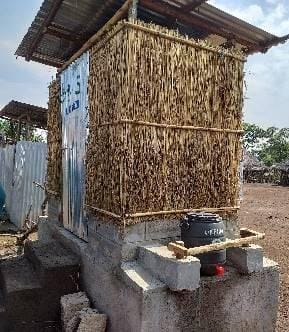
Outcome: Oxfam worked with a partner (SOIL) in Haiti to install UDDTs in a number of displaced camps after the earthquake in 2010. In 2012 Oxfam installed 100 UDDT’s in the Dolo Ado Somali refugee camp in Ethiopia which proved very successful with the users mostly because they did not smell. Oxfam then replicated this 1st ever use in a refugee camp by installing them in camps in South Sudan and new refugee camps in Gambella, Ethiopia. Since Oxfam installed 100 UDDTs in 2016, all Wash agencies working in Gambella are installing them – currently there are nearly 4,000 of them – this is a huge success. The design has been simplified over time and is accepted by other agencies and the major donors as a viable option in emergencies. Users like and accept it and operation and maintenance costs have considerably reduced over time.
Tiger Worm (TW) Toilets
Problem: Pit latrines in emergencies and long term use require costly and frequent desludging. In areas where it is not possible to dig pits providing raised faecal sludge “storage containers” is a costly business. In slums in Liberia, U$20 for yearly emptying is beyond the means of most householders. In any context, the desludged material still needs to be treated and disposed of properly
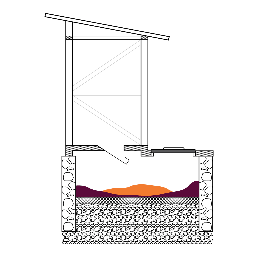
Solution: TW Toilets are an ecological sanitation solution composed of tiger worms living within a simple bio-digester; a small concrete chamber with a filtration system and bedding material that hosts the worms. Liquid waste filters through layers of sand, gravel and charcoal, while the worms break down faecal waste into vermi compost, which can be used as fertiliser on land or as chicken feed. The toilets are easy to maintain and are an ideal sanitation solution in crowded urban/peri-urban areas where space is limited and de-sludging is not an option due to both practical access constraints and affordability.
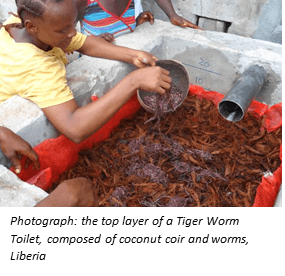
Since 2013 Oxfam has trialled TW Toilets in Liberia, Myanmar, Sierra Leone, India, Bangladesh and in a refugee camp in Ethiopia. The evidence is that TW toilets have significantly reduced the frequency of desludging. In Liberia, it has now been 6 years without any need to empty the toilets used by a family of 6-10. There have been important learnings at some sites about ensuring there is good drainage but most toilets are still functioning well. Our monitoring visits showed us the communities liked that the odour and nuisance of flies was negligible, and knew that no cleaning products should be used
Outcome: Tiger worm toilets are now a widely accepted technology amongst agencies, especially for poor communities where it is impossible to dig pit latrines. While a number of NGOs are doing small projects there are now 2 companies installing them on a much larger scale, the designs are a little different but the technology is the same. While Oxfam has proven to the sector that this is an effective technology for reducing on-going costs for poor communities the results are less clear in camp settings as the numbers of users per toilet often fluctuates widely.
SANITWEAKS
Problem: Research in emergency settings has shown that humanitarian agencies are failing to properly consult the users of the latrines they build, leading many people – especially women and girls- to stop using those latrines as they find them inaccessible, unsuitable and/or unsafe. Low sanitation usage rates mean that we are not meeting the needs of the communities we work with and will additionally result in increased public health risks in emergency situations.
Solution: The Sani Tweaks project sets out to ensure that, before the superstructure is designed, even in rapid onset emergencies, appropriate consultation with potential users happens. The goal is to ensure that all user groups are consulted and feedback is acted upon through design modification. The Sani Tweaks approach can therefore be summarised by three key words: CONSULT, MODIFY, CONSULT. For it is only through continuous engagement with the affected community and modifications made according to their feedback that our sanitation programmes can be improved.
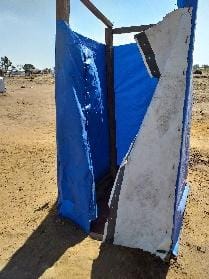
Outcome: The Sani Tweaks approach has been rolled out at 2 major interagency Wash forums. The dissemination of communication tools and interactive workshops in 4 countries in 2019 has begun and another 4 in 2020. The workshops encourage participants to put themselves ‘in the shoes’ of the crisis-affected population, to understand the needs of different users and identify opportunities to adapt latrine designs. Participants will also learn important skills around how to ask the right questions to get good honest feedback and improve the quality of designs. As each emergency sees an increased number of less experienced staff, participants will also be consulted on what tools and dissemination methods might provide the most effective support.
Solar Energy
Problem: Although Solar energy was not new in 2015 it was the case that humanitarian agencies were still not thinking immediately of powering the water pumps by solar power. The main challenge hindering the adoption of solar for water supply was the lack of technical expertise and knowledge among WASH practitioners as well as the lack of tools to gauge the suitability of solar for their contexts. Donors decisions on whether to fund solar or not was also dominated by the cost of initial investments as opposed to lifetime costs of the system.
Solution:In 2016 Oxfam and IOM initiated a global solar project to give practical advice to any humanitarian agencies that is considering using solar energy predominantly for water pumping purposes. A support package included in-country and regional training and a solar help line. Fact sheets and information helped to support agencies to make business case for change for diesel powered generators. Data around the 25 year working life of solar modules, 80% reduction in the cost of solar modules in the last 10 years and 1-3 year cost recovery on solar pumping investments.
The project is also responsible for the solar water pumping toolkit on energypedia.
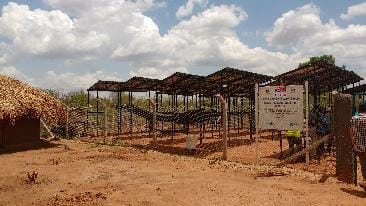
Outcome After three years the project has now done 16 technical workshops and solar trainings in 10 countries as well as numerous support visits (visited and analysed over 180 water schemes) and responding to over 200 solar questions. There has already been a huge change in thinking about solar across the humanitarian sector and in some refugee camps, such as Bidi Bidi in Kenya they transitioned from 3 solar pumping systems to 20 (100% solarisation by 2018).
Bangladesh solar pond sand filter trials
Problem: The existing model of the pond sand filter (PSF) needed people to pump water from the sand filter in to the storage tank to replenish the water they withdrew from the tank. However, this was normally left until the tank had run dry, meaning the flow of water was intermittent, allowing poor quality water to pass through the filter to the users. As a result many PSF’s do not produce clean “looking” water so people stop using it. As many as 60 per cent of all PSFs in the project area were not in use.
Solution: In discussions with the Bangladeshi Public Health Department of Engineering (DPHE), Oxfam suggested adaptations to the traditional Bangladeshi pond sand filter. Using a solar pump, a steady and continuous flow of water was ensured to fill the overhead storage tank during daylight hours, significantly improving the effectiveness of the filter to produce good quality water.
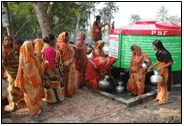
Outcome: Oxfam installed 12 of these units and trialled them over a period of 6 months. The communities which benefited from these improved pond filters saw the difference in the quality of their water and tests confirmed it. Women also noticed the reduction in diarrhoea in their families and the most important indicator is that all 12 are still in use. As a result the Bangladesh Government has now made this their standard design for all the new PSF’s they install as part of their on-going programme.
Menstrual Hygiene Management (MHM) – Women social architecture project
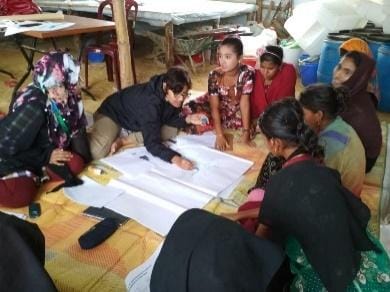
Problem: In emergencies, the priority is to provide WASH facilities that meet essential needs in the shortest length of time; this often means that sanitation engineers use pre-conceived, standardised designs that are rarely adapted based on consultation with users. Often MHM comes as a later thought to these designs, leaving women and girls to seek undignified coping mechanisms.
Solution: The woman social architecture project, piloted in Bangladesh, aims to strongly engage women and girls in the design of WASH facilities by bringing expertise from the fields of social and feminist architecture into the consultation process around building new or upgrading WASH facilities.
Outcome: Iterative consultation with women and girls on the design of bathing and toilet facilities and the construction based on these designs resulted into an improved feeling of privacy and dignity among female users and a better ability to manage their menstrual hygiene. The pilot in Bangladesh also led to a significant mind-set change in the WASH Sector, which utilised the findings to advocate for stronger consultation with women and girls on the design of WASH facilities, and encouraged interest and funding from donors to expand the project into other WASH NGOs.
Sustainability of water systems
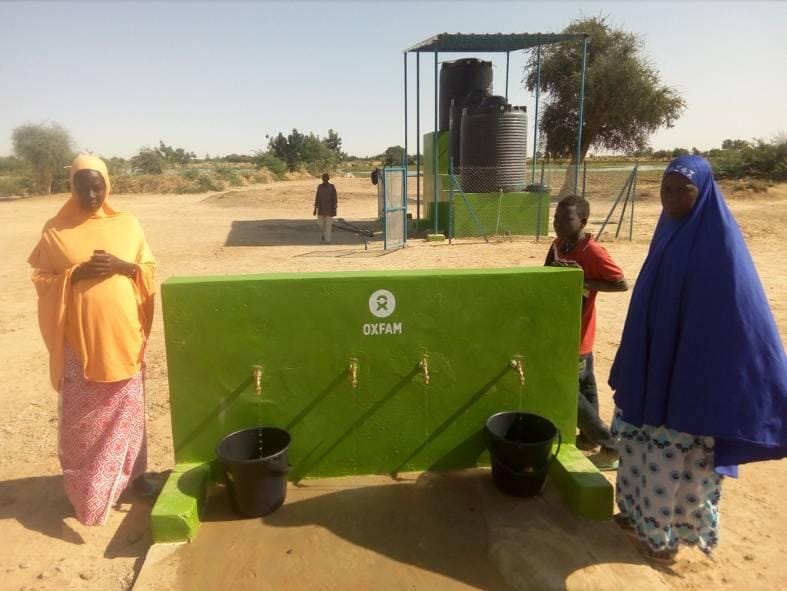
Problem: From a variety of evaluations and reports it is obvious that both the emergency and the development sector has huge problem in ensuring the continued operation and maintenance of handpumps or small water systems that they install. More than 40% of rural handpumps in sub Saharan Africa are not functioning at any one time and over 20% of water systems are not functioning. The average lifespan of a refugee camp is now over 24 years therefore all the emergency water, sanitation and solid waste disposal systems need to be designed with this in mind after the 1st phase immediate facilities are installed.
The key consideration is how will emergency WASH services be managed in the long-term when humanitarian agencies depart and Government institutions lack capacity (in the sense of skills, knowledge and resources). Traditionally in professional emergency responses, services are often provided free of charge and they are delivered with minimal participation from users. National and local Government institutions may be side-lined during the acute phase of a response; or be unwilling to assume responsibility. They may also lack the institutional capacity, as well as credible governance and finance mechanisms to play an active role. This means durable and quality service delivery is difficult to achieve.
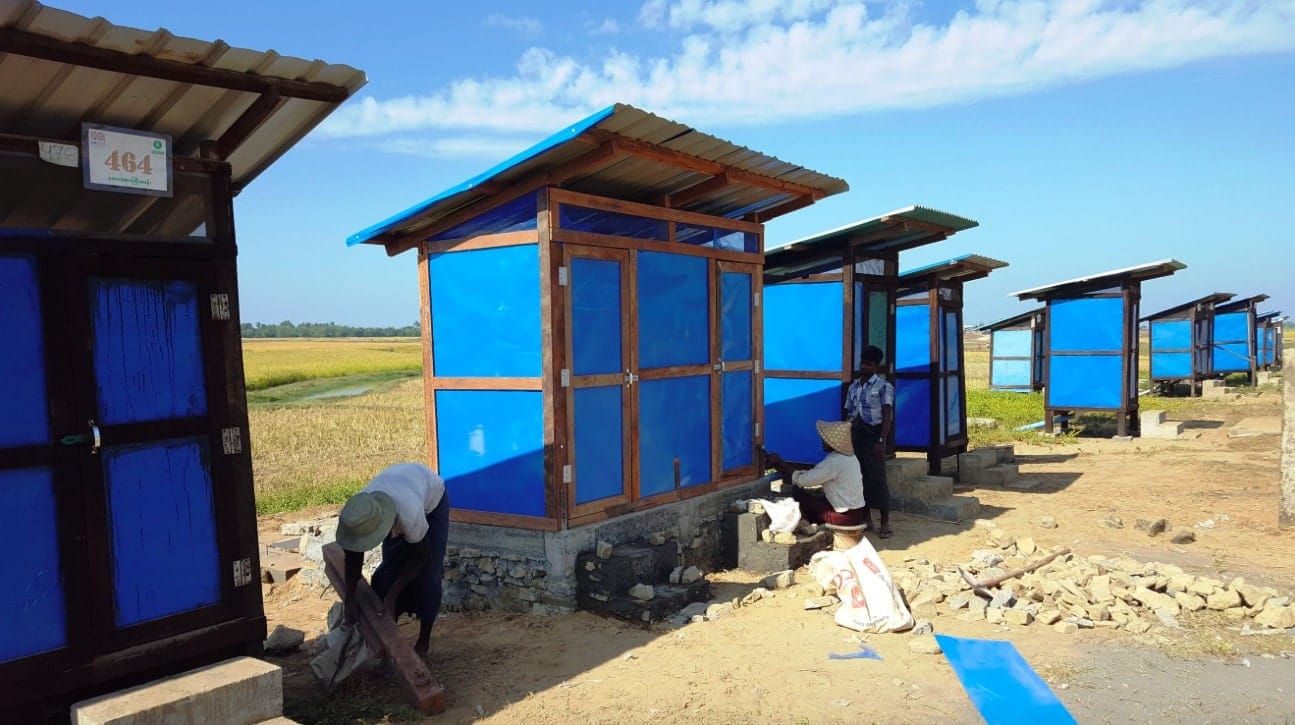
Solution: Initially Oxfam conducted 2 studies in fragile states, one in developmental settings one in emergency camps settings. The findings from those and other sectorial studies, are that the current practice of using a community based management group to keep the water system functioning has an extremely poor success rate. Oxfam has now carried out sustainability audits in refugee camps in Bangladesh, Ethiopia, Lebanon, Uganda, South Sudan, Tanzania and Algeria, and is now in a position to provide assistance to UN agencies, Government institutions and Implementing Agencies to help in develop more sustainable models for long-term service delivery.
Outcome: In 2014, Oxfam began promoting the idea of looking at longer-term perspectives right from the onset of a humanitarian crisis. This entails promoting different ways of involving the affected populations, using more sustainable technologies such as Solar panels and tiger worm toilets, and adopting different management models that involve local utilities, private sector or others. UNHCR has bought into the approach and provided funding to Oxfam for water network designs in new camps and to upgrade water supply in existing camps with the aim of avoiding duplication and building more cost-effective and efficient water supply systems. UNHCR has also funded Oxfam to compile learning about all the known management models that are commonly applied in refugee settings, the idea being to build on this learning and improve the management structures so that more durable and better quality service delivery can be achieved in longer-term refugee settings.
Water management systems
Problem: In Nepal, only 25% of water supply schemes are functioning well. 36% need minor repairs and 39% need major repairs, rehabilitation or reconstruction. While there are several approaches to setting up schemes, there is only one model of ongoing service management – community-based management through local water user committees. Research has shown that these committees are often unable to operate schemes sustainably – they struggle to collect enough money through tariffs, don’t have the technical capacity to carry out maintenance, and often lack accountability or transparency. While most people accept that the current model doesn’t work, no one has determined where and how to better invest in sustainability of small-town water operators.
Solution: To develop a solution for a more sustainable management model, Oxfam worked with Le Fil Consulting to understand the unit economics of small water service providers. We surveyed water supply schemes in 2 regions of Nepal, building a financial model (profit/loss statement) of ‘typical’ water supply schemes (something that had never been done before in rural Nepal).
Based on this data Oxfam identified critical ‘levers’ to boost effectiveness and efficiency of water service delivery through alternative management models. These include driving investment in household water connections by giving poorer households the option to pay in instalments, automating water billing through mobile money platforms and outsourcing operation & maintenance (O&M) of water schemes to local professionals
Outcome: Private sector partners will provide services cost-effectively at scale to the local Gaupalika (district government), financed by a more systematic approach to tariff collection and annual funding. Oxfam has already formed partnerships with local professionals to perform O&M at scale, a tech company to adapt their existing uber-like platform to manage O&M technicians and respond quickly to breakdowns, a financial institution to institute automated payment and centralized account management, and has secured commitments from local government to co-finance the service contracts. This research & analysis has proven the catalyst to build a data-driven, evidence-based model that has not only incentivized public sector investment, but has also resulted in additional donor funding to scale the model to approx. 90 water schemes over the next 5 years.
Solar still trials, Pakistan
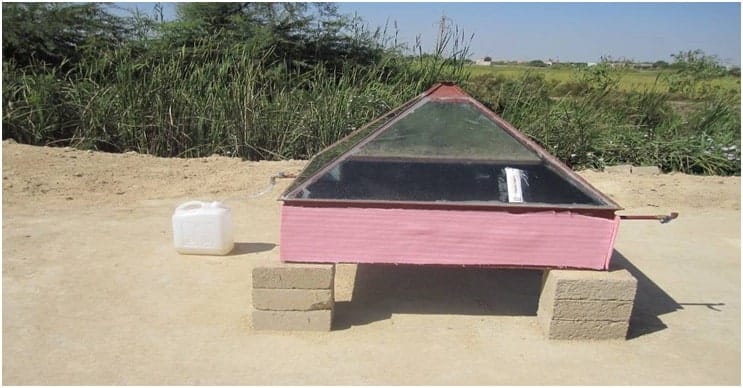
Problem: Due to cyclical droughts or sea water intrusion along coastal areas, drinking water is becoming more saline in many areas of the world. In the project area in Pakistan, most of the groundwater is saline and women have to travel up to six km a day to fetch potable water. Current desalination technology is extremely expensive and impossible for rural communities to sustain.
Solution: A low cost solution in Pakistan was to test the effectiveness of different designs of solar stills, which would make brackish water drinkable.
Outcome: Despite several modifications, we did not find a design that was capable of producing more than five litres of water per day. As a result, Oxfam decided that current low-cost solar stills are not the answer to saline ground water problems. Oxfam commissioned a research report – A Road Map for Small Scale Desalination – to assess current and emerging desalination technologies appropriate for use in our programmes. Oxfam installed small or medium scale desalination water treatment plants in Gaza, Syria, Iraq, Yemen, Somaliland and Kenya. All are based on reverse osmosis (RO) technology which accounts for vast majority of desalination plants globally. Whilst the report concludes that RO is still the most effective technology for small and medium scale water treatment (1-100m3/day), based on proven use and commercial availability, it identified Capacitative Deionisation (CDI) as an exciting emerging technology worth considering as an alternative to RO There are significant drawbacks associated with RO including high maintenance costs, low water recovery rates, the burden of disposing of large volumes of brine waste and high energy consumption. RO requires high pressure (and corresponding energy) to physically force water molecules across a semi permeable membrane. In contrast, CDI is an electrical, charge based, treatment process which uses low voltage DC current and electrodes to generate electrostatic forces which manipulate positive and negatively charges ions into separate brine and fresh water streams. CDI requires much less energy and should be able to achieve significantly higher efficiencies (up to 90% recovery/10% waste). The main acknowledged limitation of CDI is that it is limited to brackish water of up to 3,500mg/l total dissolved solids. Oxfam is partnering with one of these – Idropan. Its industrial partner – InnoDi, has established commercial production of CDI cells/modules in India, where CDI is establishing itself as a viable solution in rural and urban areas for treating brackish water and removing other undesirable dissolved elements such as fluoride and arsenic.
Conclusion
Climate related shocks are becoming more severe and frequent, conflicts becoming increasingly protracted, and growing numbers of affected and displaced populations find their needs are outpacing resources.
This publication has highlighted only some of the innovations that Oxfam has developed, with partners, to address WASH issues in this context. Oxfam continues to innovate to address these challenges and bring safe water and sanitation to people living in poverty.
1 – This video provides a good explanation of CDI, 14.00 – 30.00 mins;
2 – Although use of solar PV can significantly reduce operational costs.
© Oxfam International January 2020
This case study was written by Andy Bastable. It is part of a series of papers and reports written to inform public debate on development and humanitarian policy issues.
The information in this publication is correct at the time of going to press.
Published by Oxfam GB for Oxfam International under January 2020.
Oxfam GB, Oxfam House, John Smith Drive, Cowley, Oxford, OX4 2JY, UKOxfam is an international confederation of 17 organizations networked together in 92 countries, as part of a global movement for change, to build a future free from the injustice of poverty. Please write to any of the agencies for further information, or visit www.oxfam.org